






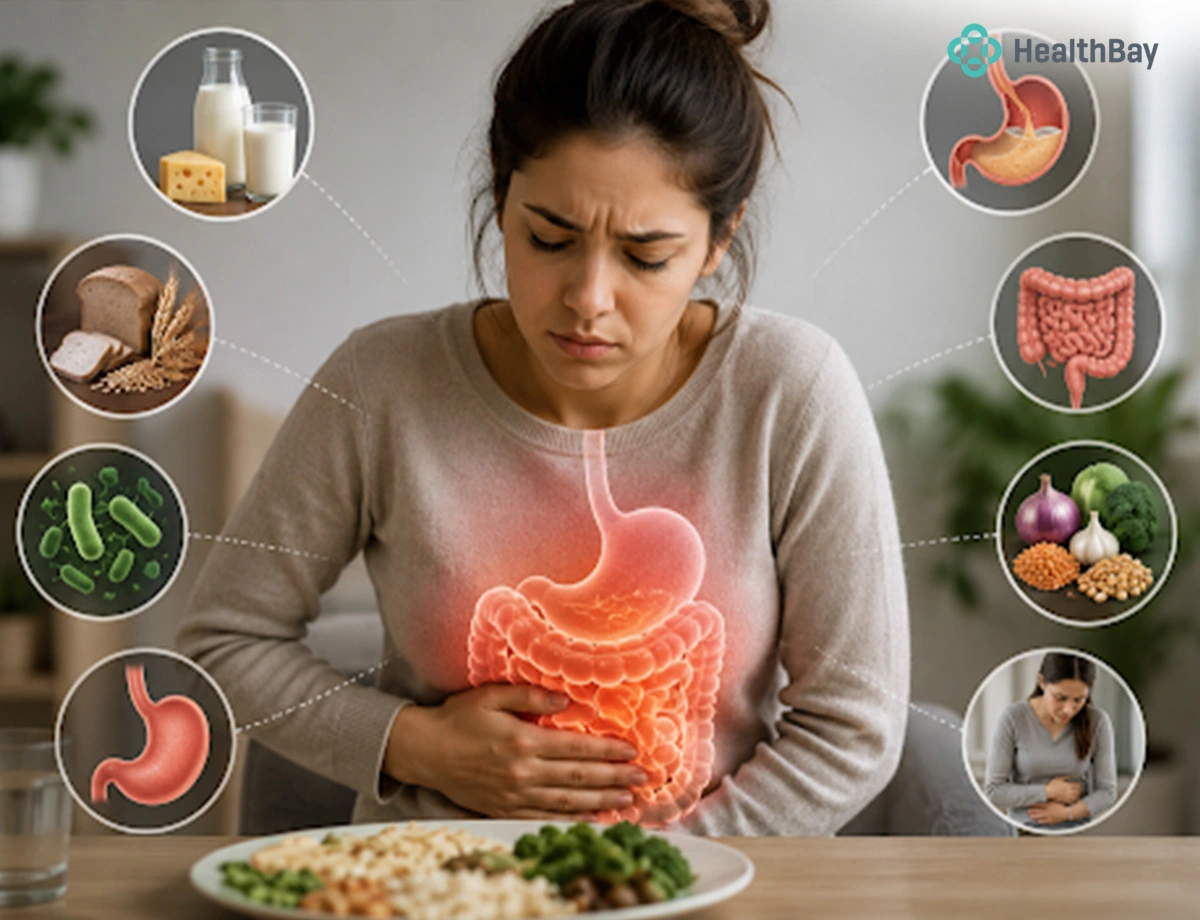
Bloating After Every Meal? Possible Causes Beyond IBS

Dr. Vinod Hegade
Consultant in Gastroenterology, Hepatology and Internal Medicine
SIBO, functional dyspepsia, coeliac disease, gastroparesis, GERD, certain foods and eating habits can also trigger persistent bloating. If bloating regularly occurs after meals or comes with abdominal pain, bowel changes, vomiting or unexplained weight loss, medical evaluation can help identify the underlying cause.
You eat a normal-sized meal, and within the hour your waistband feels tight, your stomach looks visibly swollen, and you’re uncomfortable for the rest of the day. If this happens occasionally, it’s usually harmless. If it happens after almost every meal, it’s worth understanding why – because “bloating” isn’t one condition, it’s a symptom with several very different underlying causes.
If bloating happens regularly, becomes more severe, or occurs with other digestive symptoms, speaking with a gastroenterologist can help identify the underlying cause rather than simply treating the symptom.
What Does Bloating After Eating Feel Like?
Bloating is generally described as a feeling of fullness, pressure or swelling in the abdomen. Some people experience visible abdominal distension, while others mainly notice an uncomfortable sensation without a major change in abdominal size.
The symptoms may begin immediately after eating or develop later in the digestive process. The timing can vary depending on the underlying cause.
Bloating may occur with:
- Abdominal fullness or pressure
- A visibly swollen abdomen
- Excessive gas
- Frequent burping
- Abdominal discomfort or cramping
- Feeling full sooner than expected
- Nausea
- Constipation
- Diarrhoea
- Changes in bowel habits
Some gas and bloating around mealtimes can be normal. However, symptoms that happen frequently, interfere with everyday activities or occur alongside other digestive changes deserve attention.
Is Bloating After Every Meal Always IBS?
No. IBS can cause bloating, but the condition is typically associated with recurring abdominal pain and changes in bowel movements, such as constipation, diarrhoea or both. Bloating by itself does not establish an IBS diagnosis.
Several other digestive problems can produce similar symptoms. This is why repeatedly assuming that every episode of bloating is IBS may delay the identification of another condition.
The important question is not simply, “Do I have bloating?” but rather, what is causing the bloating and what other symptoms occur with it?
1. Food Intolerances
Certain foods may trigger digestive symptoms because the body has difficulty digesting or absorbing specific components.
Food intolerance is different from a food allergy. It may cause digestive symptoms such as bloating, gas, abdominal discomfort and diarrhoea without involving the same immune reaction associated with many food allergies.
Lactose intolerance
Lactose intolerance occurs when the small intestine does not produce enough lactase to digest lactose effectively. Symptoms may appear within hours of consuming milk or dairy products and can include bloating, gas, abdominal pain, diarrhoea and nausea.
If you consistently feel bloated after dairy-containing meals, lactose intolerance may be worth discussing with a healthcare professional.
Fructose and other carbohydrate sensitivities
Some people experience symptoms after consuming foods containing certain carbohydrates, including fructose. Undigested carbohydrates can reach the large intestine, where bacteria break them down and produce gas.
A food and symptom diary can help identify patterns without unnecessarily eliminating large numbers of foods from your diet.
2. Constipation
Constipation is an easily overlooked contributor to bloating.
You may have constipation if you:
- Have fewer bowel movements than usual
- Pass hard or dry stools
- Struggle to pass stool
- Feel that your bowel has not completely emptied
- Experience abdominal fullness or discomfort
Bowel symptoms can affect how comfortable your abdomen feels throughout the day, and constipation may make post-meal bloating more noticeable.
If bloating repeatedly occurs alongside constipation, treating the bowel problem may be an important part of improving your symptoms.
3. Functional Dyspepsia
Functional dyspepsia can cause discomfort in the upper abdomen and may become particularly noticeable around mealtimes.
People with this condition may experience:
- Early fullness
- Uncomfortable fullness after eating
- Upper abdominal discomfort
- Nausea
- Belching
- Bloating
The symptoms can overlap with several other digestive conditions, so persistent upper abdominal symptoms should be assessed rather than automatically attributed to indigestion.
4. Small Intestinal Bacterial Overgrowth
Small intestinal bacterial overgrowth, commonly known as SIBO, involves an increased number or altered type of bacteria in the small intestine.
These bacteria can produce additional gas, potentially contributing to bloating and abdominal discomfort. SIBO may also be associated with diarrhoea and weight loss. It can occur as a complication of other gastrointestinal conditions, so identifying the underlying problem is important.
Because symptoms can overlap with IBS and other digestive disorders, SIBO should not be assumed based on bloating alone.
5. Celiac Disease
Celiac disease is an immune-mediated condition triggered by gluten in people who are susceptible to it.
Digestive symptoms can include:
- Bloating
- Abdominal discomfort
- Diarrhoea
- Constipation
- Nausea
- Changes in stool
- Excessive gas
Some people may have less obvious digestive symptoms. If coeliac disease is suspected, speak with a doctor before starting a gluten-free diet, because removing gluten before appropriate testing can affect certain diagnostic results.
6. Gastroparesis
Gastroparesis occurs when food moves from the stomach into the small intestine more slowly than normal without a physical blockage.
A common feature is feeling full unusually quickly or remaining full for a long time after eating. Other symptoms may include bloating, nausea, vomiting, upper abdominal pain, belching and heartburn.
If you regularly struggle to finish normal-sized meals because you feel full very quickly, this pattern deserves medical attention.
For people with confirmed gastroparesis, dietary management may include smaller meals and other adjustments based on individual needs.
7. Gastroesophageal Reflux Disease
Gastroesophageal reflux disease, or GERD, occurs when stomach contents repeatedly flow back into the oesophagus.
Heartburn and acid regurgitation are common symptoms, but digestive discomfort may also occur alongside:
- Belching
- Upper abdominal discomfort
- Fullness after meals
- A sour taste
- Burning in the chest or throat
If bloating regularly appears with reflux symptoms, discussing the complete symptom pattern with a healthcare professional can help determine whether the two are connected.
8. Eating Too Quickly
Your eating habits can influence how much air enters the digestive tract.
Eating very quickly, drinking fizzy beverages, chewing gum and swallowing air while eating can increase gas-related symptoms. The digestive tract naturally contains gas, but additional swallowed air may make bloating and belching more noticeable.
Try slowing down during meals and chewing thoroughly. These simple changes may help if eating behaviour is contributing to your discomfort.
9. Large Meals and Certain Foods
The size and composition of a meal can influence bloating.
Some people notice symptoms after meals containing large amounts of:
- Beans and legumes
- Onions and garlic
- Certain fruits
- Dairy products
- High-fat foods
- Carbonated drinks
- Certain fermentable carbohydrates
This does not mean that these foods are universally harmful. A food that causes symptoms for one person may be well tolerated by another.
Keeping track of what you eat and when symptoms develop can help identify individual patterns. Dietary changes should ideally be targeted rather than unnecessarily restrictive.
10. Hormonal Changes
Some women experience more bloating around their menstrual period. Hormonal changes can affect fluid balance and bowel function, which may contribute to a temporary feeling of abdominal fullness.
If your symptoms follow a predictable cycle and disappear afterwards, hormonal changes may be contributing.
However, bloating that persists throughout the month, progressively worsens or occurs with other concerning symptoms should not simply be attributed to menstruation.
11. Changes in Gut Motility
The digestive tract needs coordinated movement to transport food, fluid and waste through the body.
When movement becomes slower or abnormal, symptoms such as bloating, fullness, constipation, nausea or abdominal discomfort can develop.
Conditions affecting stomach emptying or intestinal movement can therefore produce symptoms that are particularly noticeable after meals. The exact cause needs to be considered alongside the rest of the clinical picture.
12. Other Gastrointestinal Conditions
Persistent bloating can sometimes occur alongside other digestive disorders. Depending on your symptoms, medical history and examination, a doctor may consider conditions affecting the stomach, small intestine, colon, liver, gallbladder or pancreas.
This does not mean that frequent bloating is automatically a sign of a serious disease. Most causes are more common and manageable. However, recurring unexplained symptoms deserve appropriate assessment rather than repeated self-treatment.
How Can You Identify What Is Triggering Your Bloating?
The pattern of your symptoms can provide useful information.
For example:
Bloating after dairy:
May point towards lactose intolerance.
Bloating with constipation:
May indicate that bowel irregularity is contributing.
Bloating with diarrhoea:
Can occur with food intolerance, IBS, coeliac disease and other digestive conditions.
Bloating with early fullness:
May suggest a problem affecting stomach emptying.
Bloating with heartburn:
May occur alongside reflux.
Bloating with unexplained weight loss:
Requires medical evaluation.
These patterns can provide clues but cannot confirm a diagnosis by themselves.
When Should You Seek Medical Advice for Persistent Bloating?
You should consider speaking with a gastroenterologist if your bloating:
- Happens after most meals
- Continues for several weeks
- Keeps returning despite lifestyle changes
- Is becoming more severe
- Interferes with work or daily activities
- Occurs with persistent abdominal pain
- Is associated with constipation or diarrhoea
- Occurs alongside unexplained weight loss
- Is accompanied by persistent nausea or vomiting
- Occurs with blood in the stool
- Is associated with difficulty swallowing
- Occurs with persistent heartburn
Regular or persistent bloating that does not improve with dietary changes should be medically assessed.
What Tests May Be Recommended?
There is no single test that explains every case of bloating.
The evaluation depends on your symptoms and medical history. Your doctor may consider:
- Blood tests
- Stool tests
- Breath testing
- Imaging
- Endoscopy
- Tests related to stomach emptying
- Other gastrointestinal investigations when appropriate
Not everyone with bloating needs extensive testing. The purpose of evaluation is to select investigations that are relevant to the symptoms rather than ordering every available test.
What Can You Do to Reduce Bloating After Meals?
While treatment depends on the underlying cause, several everyday habits may help.
Eat slowly
Give yourself enough time to eat and chew your food properly. Eating quickly can increase swallowed air and may contribute to gas symptoms.
Reduce fizzy drinks
Carbonated beverages can add gas to the digestive tract and may worsen bloating in some people.
Keep a food diary
Write down what you eat, when you eat it and when symptoms begin. Also note bowel movements, abdominal pain and other digestive changes.
This information can help identify patterns and make a medical consultation more useful.
Make dietary changes gradually
Suddenly increasing fibre can sometimes increase gas and bloating. Gradual changes may be easier for the digestive system to tolerate.
Stay physically active
Regular movement supports healthy bowel function and may be particularly helpful if constipation contributes to your symptoms.
Avoid unnecessary elimination diets
Removing gluten, dairy, grains and multiple other food groups at the same time can make it difficult to determine what is actually causing the problem.
If dietary restriction is necessary, it should be based on an identified condition or a structured plan from a qualified healthcare professional.
Why You Shouldn’t Automatically Blame IBS
IBS is a common gastrointestinal disorder, but persistent bloating alone is not enough to establish that diagnosis.
IBS generally involves recurring abdominal pain together with changes in bowel movements. Bloating can be one of its symptoms, but similar digestive complaints occur in people with food intolerances, constipation, SIBO, functional dyspepsia and other conditions.
If you repeatedly assume your symptoms are IBS without appropriate evaluation, another condition may go unrecognised.
The better approach is to consider the complete symptom pattern.
When Can Bloating Require Urgent Attention?
Most cases of bloating are not emergencies. However, certain symptoms should not be ignored.
Seek urgent medical care if bloating occurs with:
- Severe or sudden abdominal pain
- Repeated vomiting
- Blood in vomit or stool
- Fever
- Severe abdominal swelling
- Inability to pass stool or gas
- Fainting or significant weakness
- Unexplained weight loss
Inability to pass gas or stool alongside abdominal pain or vomiting can require urgent assessment.
How Is Persistent Bloating Treated?
There is no universal treatment because the appropriate approach depends on the cause.
For example, management may involve:
- Addressing constipation
- Reducing or managing a confirmed food intolerance
- Treating an underlying gastrointestinal disorder
- Making targeted dietary changes
- Managing reflux symptoms
- Addressing delayed stomach emptying when diagnosed
- Using condition-specific medication when appropriate
The goal is to understand why the bloating occurs rather than continually treating abdominal discomfort without addressing its possible source.
Bloating After Every Meal Shouldn’t Be Ignored
Bloating after every meal can be caused by much more than IBS. Food intolerance, constipation, SIBO, functional dyspepsia, coeliac disease, gastroparesis, reflux, dietary habits and changes in digestive movement may all contribute.
Occasional bloating is common, but persistent symptoms deserve a closer look, especially when they affect your quality of life or occur alongside abdominal pain, bowel changes, nausea, vomiting or unexplained weight loss.
Understanding the cause can help you move beyond temporary relief and choose a more appropriate approach to digestive health.
FAQs
Several factors can contribute, including food intolerance, constipation, IBS, SIBO, functional dyspepsia, gastroparesis, reflux and eating habits. The cause cannot be determined from bloating alone.
No. IBS is one possible cause, but several digestive conditions can produce similar symptoms. IBS is generally associated with recurring abdominal pain and changes in bowel movements.
Yes. Lactose intolerance can cause bloating, gas, abdominal discomfort, diarrhoea and nausea after consuming foods or drinks containing lactose.
Yes. Constipation can cause abdominal fullness and discomfort, particularly when stools are difficult to pass or the bowel does not feel completely emptied.
SIBO can contribute to bloating and excess gas, along with symptoms such as diarrhoea or weight loss. However, similar symptoms occur with other digestive conditions, so testing may be needed before identifying SIBO as the cause.
Early fullness, prolonged fullness after meals, nausea and bloating can occur with conditions affecting stomach emptying, including gastroparesis. Persistent symptoms should be assessed by a healthcare professional.
Not necessarily. If coeliac disease is suspected, speak with a doctor before removing gluten because dietary changes may affect some diagnostic tests.
Seek medical advice if bloating is persistent, regularly returns, affects your daily life or occurs with abdominal pain, bowel changes, unexplained weight loss, vomiting or blood in the stool.
Eating slowly, reducing fizzy drinks, staying physically active and keeping a food and symptom diary may help identify triggers. Avoid making multiple restrictive dietary changes without professional guidance.
Yes, treatment depends on the underlying cause. Addressing constipation, managing a confirmed food intolerance, treating an identified digestive condition or making appropriate dietary changes may improve symptoms.
Struggling With Bloating After Every Meal? Let’s Find Out Why.
You don’t have to keep guessing what’s causing your discomfort. At Healthbay, our gastroenterology and digestive health specialists can help identify the real reason behind your bloating – whether it’s IBS, SIBO, a food intolerance, or something else – with the right tests and a personalized treatment plan.
Book a consultation with a Healthbay digestive health specialist today and take the first step toward lasting relief.
Book an Appoinment


