






Diving Injuries, Barotrauma & Ear Squeeze Treatment
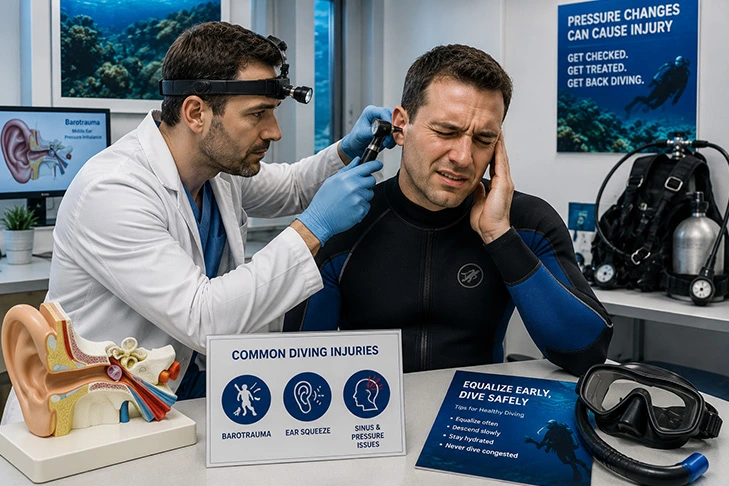
Diving is an exciting and rewarding activity, but exposure to underwater pressure changes can occasionally lead to injuries and medical complications. Whether you are a recreational diver, professional diver, or diving instructor, prompt recognition and treatment of diving-related injuries are essential for ensuring a safe recovery and preventing long-term complications.
At HealthBay, our experienced Diving Medicine specialists provide comprehensive assessment, diagnosis, treatment, and follow-up care for a wide range of diving-related injuries.
From ear squeeze and sinus barotrauma to decompression sickness and pulmonary injuries, our team offers evidence-based care tailored to each diver’s unique needs.
Diving Injury Assessment by a Diving Medicine Specialist
Symptoms after diving should not automatically be attributed to routine pressure changes. Ear pain, hearing changes, dizziness, vertigo, unusual fatigue, neurological symptoms or other complaints may require assessment by a physician familiar with diving-related conditions.
Our diving medicine assessment can help evaluate:
- Ear and sinus barotrauma
- Middle-ear and inner-ear pressure injuries
- Ear squeeze and reverse squeeze
- Eardrum-related injuries following pressure changes
- Post-dive dizziness, vertigo or hearing changes
- Suspected decompression illness
- Diving accidents requiring medical evaluation
- Persistent symptoms following a previous diving injury
- Fitness to return to diving after recovery
A detailed history of the dive profile, depth, duration, ascent and descent, equalisation difficulties and timing of symptoms can help guide the medical assessment.
Scuba Diving Ear Pain & Ear Barotrauma
Ear barotrauma is one of the most common diving-related injuries and can occur when pressure in the middle ear does not equalise properly during descent or ascent. Divers may initially notice fullness, blocked ears or discomfort, which can progress to significant pain. More severe injuries may involve fluid or blood behind the eardrum, eardrum perforation, hearing changes or vertigo.
If you are experiencing persistent ear symptoms after diving, consultation with a scuba diving ear pain specialist can help determine whether the problem is related to middle-ear barotrauma, inner-ear injury, Eustachian tube dysfunction or another condition.
Common Symptoms Requiring Evaluation Include:
- Ear pain during or after descent
- A blocked or full sensation in the ear
- Difficulty equalising pressure
- Reduced hearing after a dive
- Ringing or buzzing in the ear
- Fluid or blood discharge from the ear
- Vertigo or balance problems
- Persistent discomfort after surfacing
HealthBay can assess diving-related symptoms and determine whether further ENT evaluation or specialist management is appropriate.
Ear Squeeze Treatment in Dubai
An ear squeeze can occur when pressure in the middle ear cannot equalise with the surrounding water pressure. Continuing to descend despite difficulty equalising can increase the severity of the injury. Divers should not continue a dive when they cannot safely equalise.
Our assessment for ear barotrauma treatment in Dubai may include reviewing the circumstances surrounding the injury, examining the ear and evaluating symptoms that could indicate a more significant pressure-related injury.
Inner-ear symptoms require particular attention. Severe vertigo, hearing loss, tinnitus or balance disturbances after diving can occur with inner-ear barotrauma and may require urgent medical assessment. Inner-ear barotrauma and inner-ear decompression sickness can present with similar symptoms but require different management, making specialist assessment important.
Decompression Sickness Evaluation & Follow-Up
Decompression sickness (DCS) can occur when decompression causes symptoms related to gas bubbles in the body. Symptoms can vary considerably and may include neurological, musculoskeletal or other systemic manifestations.
If decompression sickness is suspected, prompt medical assessment is important. Even when symptoms improve after initial care, follow-up evaluation may still be necessary because symptoms can recur or subtle problems may remain.
HealthBay provides diving medicine consultations for decompression sickness follow up UAE, including assessment of ongoing symptoms and consideration of fitness to resume diving. The timing and extent of return-to-dive assessment depend on the nature of the injury, recovery and individual medical findings.
When Should You See a Diving Doctor?
Consider seeing a diving medicine physician if you develop:
- Persistent ear pain or pressure after a dive
- Hearing loss, tinnitus or ear discharge
- Vertigo or significant dizziness
- Difficulty equalising during repeated dives
- Symptoms following an unusually deep or prolonged dive
- Symptoms after a rapid ascent or difficult decompression
- Persistent symptoms following suspected decompression sickness
- Concerns about returning to diving after a previous injury
If you are searching for a diving doctor near me, choosing a physician with specific diving medicine experience can help ensure that the assessment considers both the medical condition and the demands of diving.
Return-to-Dive Assessment After an Injury
Returning to diving after barotrauma or decompression illness should be based on medical evaluation rather than symptom improvement alone. The underlying cause of the injury, residual symptoms, ability to equalise and risk of recurrence may all need to be considered.
For ear injuries, return to diving may require confirmation that the injury has healed and that the Eustachian tube is functioning adequately. Persistent or recurrent vertigo, hearing changes or difficulty equalising may require further specialist assessment, including ENT evaluation where appropriate.
HealthBay’s diving medicine team includes physicians experienced in recreational and commercial diving assessments and diving accidents.
Why Choose HealthBay for Diving Injury Care?
- Diving medicine assessment for recreational and professional divers
- Evaluation of diving accidents and pressure-related injuries
- Experience with ear and other diving-related medical concerns
- Individualised assessment before returning to diving
- Access to ENT and other specialist care when required
- Medical guidance based on the diver’s symptoms, history and dive exposure
FAQs
Flying after a diving injury may increase the risk of complications, particularly after decompression sickness or barotrauma. A Diving Medicine specialist should assess your condition and advise when it is safe to travel by air.
Severe ear pain, hearing loss, dizziness, ringing in the ears, or ear bleeding following a dive may indicate significant barotrauma and should be evaluated promptly.
Symptoms such as sudden vertigo, balance problems, nausea, vomiting, hearing loss, and tinnitus may suggest inner ear barotrauma and require immediate medical attention.
Yes. Nasal congestion, allergies, and sinus infections can interfere with pressure equalization and increase the risk of sinus and ear barotrauma.
No. Divers experiencing pain or difficulty equalizing should stop descending and follow safe diving practices to prevent worsening injury.
Recovery time varies depending on the severity of the injury. Mild cases may improve within days, while more significant injuries may require longer treatment and follow-up.
Yes. Certain diving injuries, particularly ear and lung injuries, may increase the risk of recurrent problems. A return-to-diving assessment is often recommended.
Yes. Some diving-related conditions, including decompression sickness, may develop hours after surfacing. Delayed symptoms should always be medically assessed.
Please bring your recent dive profile, dive computer information if available, previous medical records, medication list, and details of your symptoms.
Yes. Young divers can also experience barotrauma and other diving-related injuries. Prompt evaluation is important to ensure appropriate treatment and recovery.
Get Assessed for a Diving Injury in Dubai
Persistent ear pain, vertigo, hearing changes or other symptoms after diving should not be ignored. HealthBay provides diving medicine consultations to assess diving-related injuries and guide appropriate follow-up and return-to-dive decisions.
Book a Diving Medicine Consultation at HealthBayto discuss post-dive symptoms, barotrauma, ear squeeze, suspected decompression illness or concerns about returning to the water.


