






OB-GYN Explained: When Do You Need an Obstetrician vs. a Gynecologist?

Reviewed by
Dr. Nana Wiberg
Professor | Consultant Obstetrician & Gynaecologist
A gynecologist focuses on women’s reproductive health, including menstrual disorders, fertility, contraception, menopause, and preventive screenings. An obstetrician is a medical specialist who provides care during pregnancy, childbirth, and the postpartum period. Many doctors are trained in both specialties, making them OB-GYNs (Obstetrics and Gynecology specialists). At HealthBay Clinic, our team of specialist obstetricians and gynecologists offers comprehensive care, from routine women’s health check-ups and fertility counselling to pregnancy management and delivery planning, ensuring seamless support at every stage of a woman’s life.
Women’s healthcare needs change throughout different stages of life, from the first menstrual cycle and family planning to pregnancy, childbirth, menopause, and beyond. Yet one question continues to cause confusion for many women:
Should I consult a gynecologist or an obstetrician?
The terms are often used interchangeably, and many people assume they refer to the same type of doctor. While both specialize in women’s reproductive health, their areas of expertise are different. Understanding these differences can help you choose the right specialist for your specific healthcare needs, whether you’re planning a pregnancy, experiencing menstrual concerns, seeking preventive care, or navigating menopause.
Fortunately, you don’t always need to choose between the two. Today, many physicians are trained in both obstetrics and gynecology, allowing them to provide seamless care across every stage of a woman’s health journey.
In this guide, we’ll explain the difference between an obstetrician and a gynecologist, outline when you should see each specialist, and help you understand why comprehensive OB-GYN care plays a vital role in maintaining lifelong women’s health.
What Is Obstetrics and Gynecology, Exactly?
Although obstetrics and gynecology are closely related medical specialties, they each focus on different aspects of women’s health. Together, they form one of the most comprehensive areas of medicine dedicated to female reproductive health, pregnancy, and overall wellbeing.
Understanding what each specialty covers can make it easier to know which healthcare professional is best suited to your needs.
What Is Obstetrics?
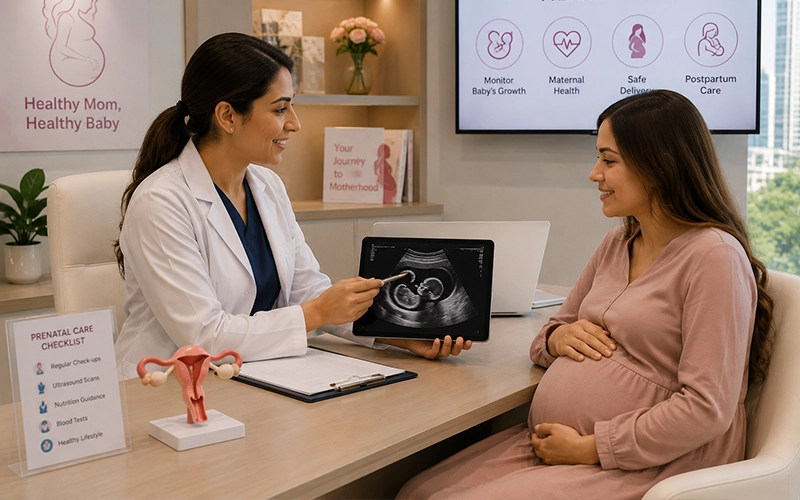
Obstetrics is the branch of medicine dedicated to caring for women during pregnancy, childbirth, and the postpartum period. An obstetrician is specially trained to monitor both the mother’s health and the baby’s development, ensuring the safest possible pregnancy and delivery experience.
Obstetric care begins even before conception for many women.Preconception counselling helps identify potential health concerns, optimise nutrition, review medications, and prepare for a healthy pregnancy. Once pregnancy is confirmed, regular antenatal appointments allow your doctor to monitor fetal growth, assess maternal health, and identify any complications early.
Throughout pregnancy, an obstetrician oversees routine prenatal care while also managing more complex situations, including high-risk pregnancies. This may involve coordinating additional investigations, monitoring existing medical conditions, or collaborating with other specialists when necessary.
An obstetrician commonly provides care for:
- Pregnancy confirmation and early prenatal assessment
- Routine antenatal check-ups
- Ultrasound monitoring and fetal wellbeing assessments
- Pregnancy nutrition and lifestyle guidance
- Screening for gestational diabetes and pregnancy-related hypertension
- Management of high-risk pregnancies
- Labour and delivery planning
- Vaginal birth and Caesarean section care
- Postpartum recovery and maternal health follow-up
Beyond delivering babies, obstetricians play an essential role in protecting the health of both mother and baby from early pregnancy through recovery after childbirth. Their expertise ensures that potential complications are identified promptly and managed appropriately throughout the pregnancy journey.
What Does an Obstetrician Actually Do?
An obstetrician’s scope narrows in on one specific window: conception through the postpartum period. Their responsibilities include:
- Prenatal care: Confirming and monitoring a pregnancy through regular check-ups and scans.
- High-risk pregnancy management: Managing conditions such as gestational diabetes, preeclampsia, and multiple pregnancies.
- Maternal-fetal monitoring: Tracking the baby’s growth and the mother’s health throughout pregnancy.
- Labor and delivery: Providing care for vaginal births and Caesarean sections, including emergency obstetric services.
- Postpartum recovery: Monitoring physical healing and screening for postnatal complications.
Once the postpartum period ends, an obstetrician’s role in your care typically closes, which is exactly the point where many patients drift back to seeing “a gynecologist” again, unless their doctor already covers both.
When Should You See an Obstetrician?
Many women believe they only need an obstetrician once labour begins. In reality, obstetric care often starts much earlier.
You should consider consulting an obstetrician if you:
- Have recently received a positive pregnancy test
- Are planning to become pregnant
- Have experienced previous pregnancy complications
- Are expecting twins or multiple babies
- Have chronic health conditions, including diabetes or hypertension
- Experience bleeding, severe abdominal pain, or concerning pregnancy symptoms
- Need guidance on labour, delivery, or postpartum recovery
Early prenatal care supports healthier pregnancy outcomes and allows your healthcare provider to monitor both maternal and fetal health from the beginning.
What Is Gynecology?
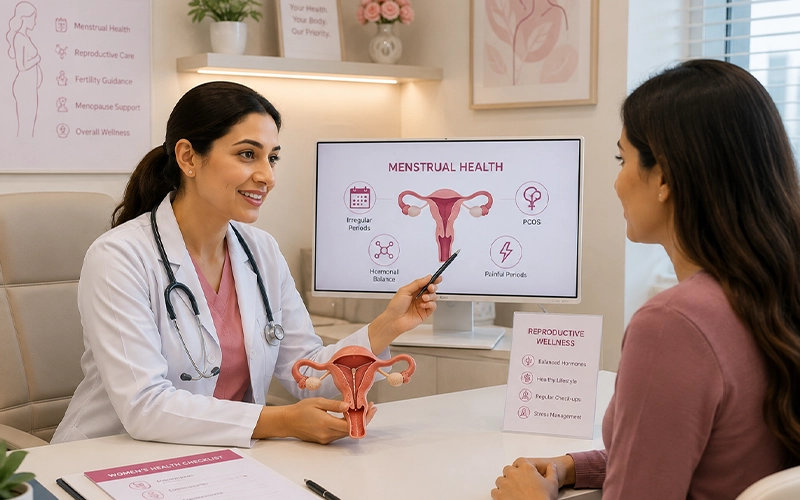
Gynecology is the medical specialty focused on the health of the female reproductive system throughout every stage of life. Unlike obstetrics, which primarily centres on pregnancy and childbirth, gynecology addresses a wide range of reproductive and hormonal health concerns regardless of whether a woman is pregnant.
A gynecologist provides preventive care, diagnoses reproductive health conditions, manages hormonal disorders, and supports women through different life stages from adolescence and reproductive years to menopause and healthy aging.
Regular gynecological check-ups are important, even if you feel healthy. Preventive examinations, screenings, and early diagnosis can help detect conditions before symptoms develop while supporting long-term reproductive health.
A gynecologist commonly helps diagnose and treat:
- Irregular or painful menstrual cycles
- Heavy menstrual bleeding
- Polyendocrine Metabolic Ovarian Syndrome (PMOS)
- Endometriosis
- Uterine fibroids
- Ovarian cysts
- Pelvic pain
- Vaginal infections
- Sexually transmitted infections (STIs)
- Fertility concerns
- Contraceptive counselling
- Cervical cancer screening
- HPV-related conditions
- Perimenopause and menopause symptoms
In addition to treating medical conditions, gynecologists emphasize preventive healthcare through regular pelvic examinations, cervical screening, breast health awareness, and lifestyle counselling that supports lifelong wellbeing.
What Does a Gynecologist Actually Do?
A gynecologist manages the full scope of female reproductive and hormonal health whether or not pregnancy is on the table. That includes:
- Routine and preventive care: Annual pelvic exams, breast checks, and cervical screening (Pap smears).
- Menstrual health: Investigating and treating irregular, heavy, or painful periods.
- Hormonal conditions: PMOS, thyroid-linked cycle changes, and perimenopause or menopause symptoms.
- Structural conditions: Uterine fibroids, ovarian cysts, and endometriosis.
- Infection and screening care: HPV, cervical dysplasia, and other reproductive tract infections.
- Fertility evaluation: Initial infertility workups, often before referral to a reproductive endocrinology specialist.
- Contraception and family planning counselling: Personalized guidance on birth control options and reproductive planning.
If you’re not pregnant and something feels off, such as a missed period, unusual discharge, pelvic pain, or you’re simply due for your annual check, a gynecologist (or a dual-specialist OB-GYN acting in that capacity) is who you’d see.
When Should You Visit a Gynecologist?
Routine gynecological care is an important part of preventive healthcare, even if you don’t have noticeable symptoms. You should consider visiting a gynecologist if you experience:
- Painful or irregular periods
- Excessively heavy menstrual bleeding
- Pelvic discomfort or chronic pelvic pain
- Unusual vaginal discharge or persistent itching
- Concerns about fertility or difficulty conceiving
- Symptoms of menopause or hormonal changes
- Pain during intercourse
- Abnormal bleeding between periods
- The need for contraception or family planning advice
- A family history of gynecological cancers
- It’s time for your routine cervical screening or women’s wellness examination
Many gynecological conditions develop gradually and may not cause obvious symptoms during their early stages. Regular check-ups allow potential concerns to be identified and managed before they become more complex.
Obstetrician vs. Gynecologist: What’s the Difference?
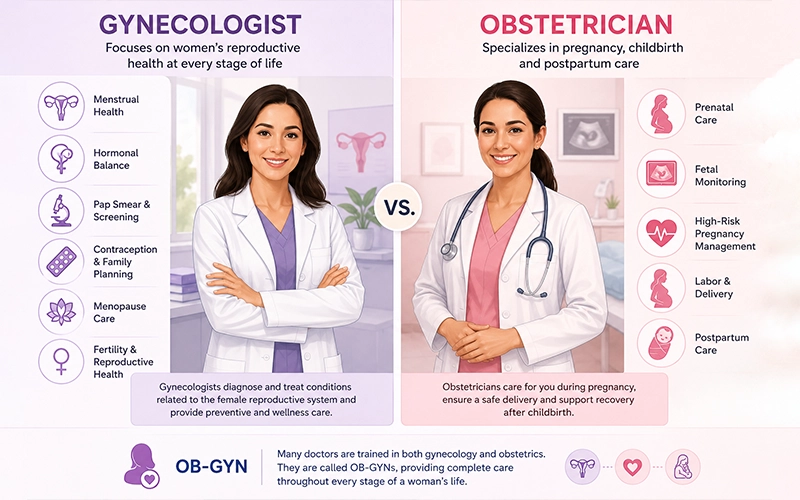
Although obstetricians and gynecologists both specialize in women’s healthcare, their primary areas of focus differ. Knowing which specialist to consult depends largely on your current health needs.
| Aspect | Gynecologist | Obstetrician |
|---|---|---|
| Primary focus | Reproductive health across a woman’s lifetime | Pregnancy, labor, delivery, and postpartum recovery |
| Typical visits | Annual exams, Pap smears, contraception counselling, and menopause management | Prenatal check-ups, ultrasounds, delivery planning, and postnatal follow-up |
| Common conditions treated | PMOS, endometriosis, fibroids, irregular periods, HPV/cervical concerns, and menopause | High-risk pregnancy, gestational diabetes, preeclampsia monitoring, and labor complications |
| When you’d see them | Any time between puberty and post-menopause, whether pregnant or not | During pregnancy and shortly after childbirth |
| Surgical involvement | Laparoscopy, hysterectomy, and hysteroscopy | Delivery (vaginal or Caesarean section) and obstetric emergency procedures |
Why Are Many Doctors Called OB-GYNs?
If you’ve searched for women’s healthcare services, you’ve probably come across the term OB-GYN. This simply refers to a doctor who has completed specialist training in both obstetrics and gynecology, allowing them to care for women across every stage of life from adolescence and reproductive health to pregnancy, childbirth, and menopause.
Rather than seeing different specialists as your healthcare needs change, an OB-GYN can provide continuous care throughout your journey. For example, the same doctor who helps diagnose and manage conditions such as PMOS or irregular periods may also support you when you’re planning a pregnancy, provide antenatal care throughout your pregnancy, and continue caring for you after childbirth.
This continuity helps build a trusted doctor-patient relationship while ensuring your medical history, reproductive goals, and overall health are consistently considered when making treatment decisions.
At HealthBay Clinic, our specialist obstetricians and gynecologists provide comprehensive care under one roof, giving women convenient access to preventive care, pregnancy services, fertility support, and long-term reproductive healthcare without unnecessary referrals.
Why Seeing the Same OB-GYN Throughout Your Journey Can Make a Difference
Women’s healthcare isn’t made up of isolated appointments it evolves over time. Having one specialist who understands your medical history can lead to more coordinated, personalized care.
Choosing a dual-trained OB-GYN offers several advantages:
- Continuity of Care: Your doctor develops a thorough understanding of your health history, previous treatments, family history, and future pregnancy plans, allowing for more informed clinical decisions.
- Personalized Treatment Plans: Every woman has different healthcare needs. An OB-GYN can tailor recommendations based on your age, lifestyle, medical history, reproductive goals, and changing health priorities.
- Better Pregnancy Planning: If you’ve already been seeing your OB-GYN for routine gynecological care, pregnancy planning becomes more streamlined. Existing health conditions can be managed before conception, helping support a healthier pregnancy.
- Seamless Pregnancy and Postpartum Care: From your first prenatal appointment to recovery after childbirth, receiving care from the same specialist creates a more reassuring and consistent experience for many women.
- Lifelong Women’s Healthcare: Even after pregnancy, your healthcare needs continue to evolve. Regular wellness examinations, menopause management, cervical screenings, and preventive care remain important throughout adulthood.
So, When Do You Actually Need Which One?
You likely need gynecology-focused care if you’re experiencing:
- Irregular, missed, or unusually heavy periods
- Pelvic pain unrelated to pregnancy
- Symptoms of PMOS (acne, weight changes, irregular cycles)
- Suspected fibroids, cysts, or endometriosis
- Symptoms of perimenopause or menopause, such as hot flashes, sleep disturbances, and mood changes
- A due annual exam, Pap smear, or HPV screening
- Trouble conceiving, before a pregnancy has been confirmed
- A first gynecology visit as a teenager or young adult
You need obstetric care once:
- You have a confirmed or suspected pregnancy
- You’re planning conception and want a preconception health check
- You’re managing a high-risk pregnancy (twins, gestational diabetes, advanced maternal age, or prior pregnancy complications)
- Your due date is approaching, and you need to plan for childbirth
- You’ve just given birth and need postpartum follow-up
The overlap most people don’t realize exists: conditions like PMOS, fibroids, or endometriosis can directly affect fertility and pregnancy outcomes which is exactly why continuity between your gynecologist and your obstetrician matters so much. If they’re two different doctors, your pregnancy team may be starting from scratch on your history. If they’re the same specialist OB-GYN, nothing gets lost in translation.
Why a Dual-Specialist OB-GYN Is the Better Choice for Most Women
While a gynecologist focuses generally on female reproductive health, an obstetrician specializes in pregnancy and childbirth, but you shouldn’t have to manage two separate doctor relationships to get complete care. At HealthBay, our doctors are dual-specialist obstetricians and gynecologists, which means:
- One doctor, one file, one history: Your hormonal history, prior gynecological conditions, and family planning goals are already on record before you’re even pregnant, so nothing needs to be re-explained.
- Smoother transitions: If you’re trying to conceive or managing a condition like PMOS or fibroids, the same specialist who diagnosed it can guide you through preconception, pregnancy, and beyond.
- Consistency through every life stage: From your first period, through family planning and pregnancy, to menopause, you can stay with the same trusted physician instead of starting a new doctor–patient relationship at each stage.
- Faster, more accurate high-risk pregnancy management: A doctor who already understands your gynecological baseline is better equipped to identify changes early and provide timely care.
What to Expect at Your First OB-GYN Visit
Whether you’re coming in for a general gynecology concern or your first prenatal appointment, a first visit typically includes:
- A detailed health history: Menstrual history, sexual health, family history, and any current symptoms.
- A physical and pelvic exam: For non-pregnant visits, this may include a physical and pelvic examination. For early pregnancy visits, it may include an initial dating scan and blood work.
- Screening recommendations: Based on your age and risk factors, your doctor may recommend a Pap smear, HPV test, or hormonal panels.
- A conversation, not just an exam: You’ll have time to discuss your symptoms, family planning goals, contraception options, or pregnancy concerns without feeling rushed.
- Bleeding between periods or after menopause
- Severe or worsening pelvic pain
- Sudden, significant changes to your menstrual cycle
- Pain during intercourse that’s new or worsening
- Any bleeding or cramping during a confirmed pregnancy
- Signs of infection, including unusual discharge, odor, or itching that doesn’t resolve
- Experienced specialist obstetricians & gynecologists providing evidence-based care.
- Comprehensive women’s healthcare, from adolescence through menopause.
- Routine gynecological check-ups and preventive health screenings.
- Pregnancy care, antenatal monitoring, and postpartum follow-up.
- Support for fertility planning and reproductive health concerns.
- Collaborative care with other medical specialties when needed.
- Modern diagnostic facilities for timely evaluation and treatment.
- Compassionate, patient-focused care in a comfortable clinical environment.
If it’s your first-ever gynecology visit, our guide on what to expect at your first gynecology appointment walks through it in more detail. If you’re newly pregnant, our first-trimester care guide covers what the first few obstetric visits look like.
Signs You Shouldn’t Wait to See an OB-GYN
Certain symptoms deserve a same-week appointment rather than waiting for your annual check-up:
If any of these apply to you, consider scheduling an appointment with a specialist obstetrician and gynecologist instead of delaying care.
Why Choose HealthBay Clinic for Obstetrics & Gynecology Care in Dubai?
Choosing the right specialist obstetrician and gynecologist involves more than simply finding someone to treat a specific condition. It means partnering with a healthcare professional who understands your medical history, listens to your concerns, and supports your health through every stage of life.
At HealthBay Clinic, you can expect:
By bringing preventive care, pregnancy services, and women’s health expertise together under one roof, we aim to provide seamless care that supports your wellbeing at every stage of life.
Take the Next Step Towards Better Women’s Health

Whether you’re booking your first routine gynecological check-up, planning a pregnancy, expecting a baby, or seeking support during menopause, care from an experienced obstetrician and gynaecologist can provide coordinated, reassuring support throughout every stage of your health journey.
At HealthBay Clinic, our integrated Obstetrics and Gynecology team is committed to providing compassionate, evidence-based care tailored to your individual needs. By combining preventive gynecological care with comprehensive pregnancy services, we help women make informed healthcare decisions throughout every phase of life.
Book a consultation with our Obstetrics & Gynecology specialists today and invest in your long-term health and well-being.
Frequently Asked Questions
A gynecologist specializes in women’s reproductive health, including menstrual disorders, contraception, fertility, cervical screening, and menopause. An obstetrician focuses on pregnancy, childbirth, and postpartum care. Many doctors are trained in both specialties and practice as OB-GYNs, providing comprehensive care throughout every stage of a woman’s life.
Not exactly. A gynecologist focuses on reproductive and hormonal health, while an OB-GYN is a doctor who has completed specialist training in both obstetrics and gynecology. This allows them to provide routine women’s healthcare as well as pregnancy, childbirth, and postpartum care, offering continuity of care throughout a woman’s life.
Yes. A dual-trained OB-GYN can provide both gynecological and obstetric care. This means the same doctor can support you with preventive health screenings, menstrual and hormonal concerns, fertility planning, pregnancy care, childbirth, and postpartum recovery. Receiving care from one specialist helps ensure continuity, personalized treatment, and a better understanding of your medical history.
Many healthcare professionals recommend scheduling your first gynecological visit during the late teenage years or early adulthood, even if you have no symptoms. You should also see a gynecologist if you experience irregular or painful periods, abnormal bleeding, pelvic pain, unusual vaginal discharge, or have questions about contraception, sexual health, or reproductive wellbeing.
It’s recommended to book your first appointment with an obstetrician soon after a positive pregnancy test. Early prenatal care helps confirm your pregnancy, estimate your due date, monitor your baby’s development, assess your overall health, and identify any potential complications as early as possible.
Yes. A preconception consultation with a gynecologist or OB-GYN is recommended before trying to conceive. During this visit, your doctor can review your medical history, assess your reproductive health, discuss lifestyle and nutrition, recommend prenatal vitamins such as folic acid, and identify any conditions that could affect pregnancy or fertility.
The ideal frequency depends on your age, medical history, symptoms, and individual risk factors. Many women benefit from annual gynecological check-ups, even when they feel healthy. Regular visits allow your doctor to perform preventive screenings, discuss reproductive health, monitor hormonal changes, and detect potential health concerns at an early stage.
Yes. OB-GYN specialists commonly assess fertility concerns by reviewing your medical history, menstrual cycle, ovulation, and overall reproductive health. They may recommend investigations, identify conditions such as PMOS, endometriosis, or uterine fibroids, and provide initial treatment or refer you to a fertility specialist if advanced reproductive care is needed.
In many cases, no referral is required to book an appointment with an OB-GYN in Dubai. However, referral requirements may vary depending on your health insurance provider and individual policy. It’s advisable to check your insurance coverage before scheduling your visit.
Your first OB-GYN appointment typically begins with a discussion about your medical history, menstrual cycle, current symptoms, medications, lifestyle, and reproductive goals. Depending on the reason for your visit, your doctor may recommend a physical examination, pelvic examination, cervical screening (Pap smear), laboratory tests, or an ultrasound. You’ll also have the opportunity to ask questions about contraception, fertility, pregnancy, or any concerns related to your reproductive health in a private and supportive environment.
Book an Appoinment


