






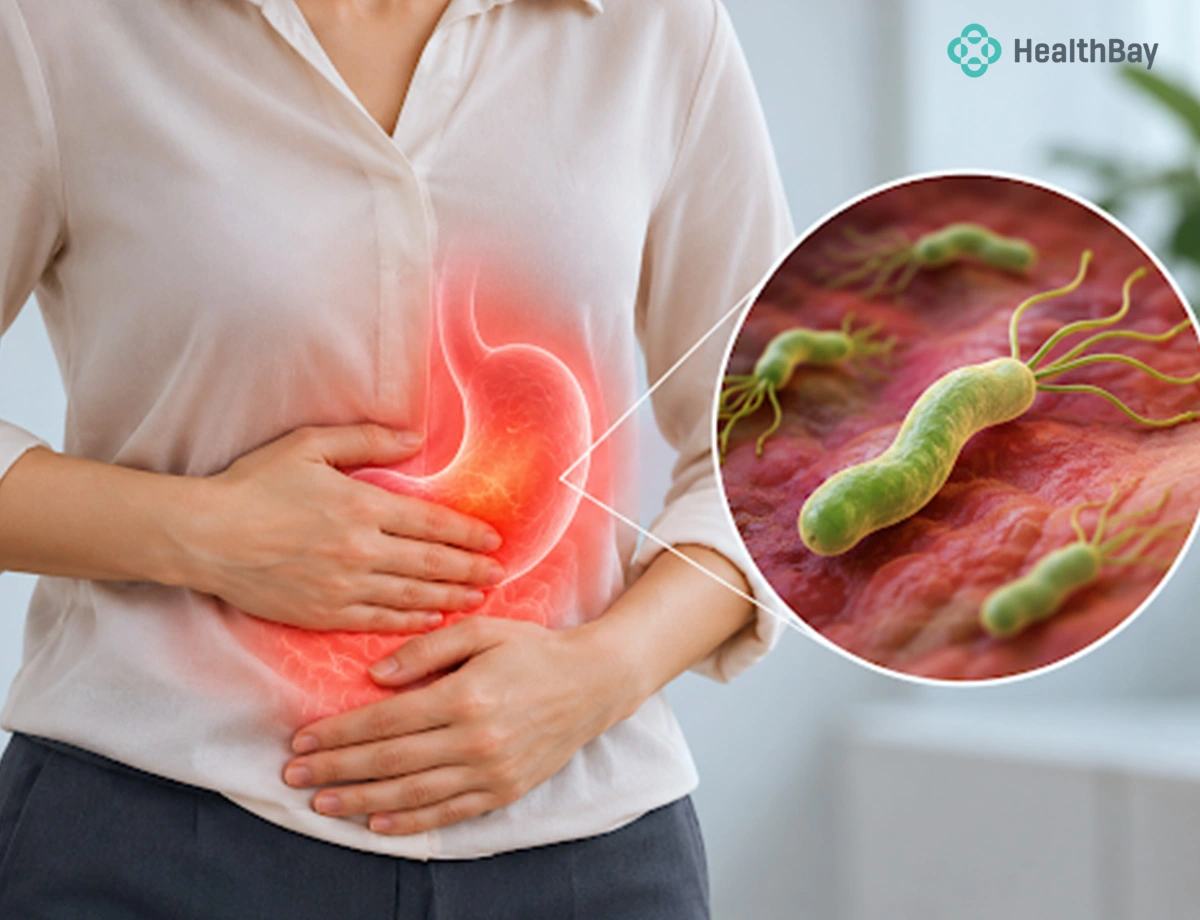
H. Pylori: The Hidden Bacterial Infection Behind Persistent Stomach Problems
H. pylori (Helicobacter pylori) is a common stomach bacterium that can cause gastritis and peptic ulcers, and over many years it can raise the risk of stomach cancer. Many people have no symptoms. Others get upper abdominal burning, bloating, nausea or early fullness that keeps returning. It is diagnosed with a breath, stool or endoscopy test and cleared with a short course of combination medicines prescribed by a doctor.
Stomach discomfort that keeps coming back is easy to blame on spicy food, stress or irregular meals. Antacids bring relief for a day or two, then the burning, bloating or nausea returns. When symptoms linger for weeks, one cause worth considering is a bacterial infection that is often missed: H. pylori.
H. pylori lives in the stomach lining of roughly half the world’s population, and most carriers never know it. In others, it quietly inflames the stomach for years and can lead to ulcers. This guide explains how the infection spreads, which symptoms to watch for, how a gastroenterologist tests for it and what treatment involves.
What Is H. Pylori and How Does It Spread?
Helicobacter pylori is a spiral-shaped bacterium that survives the stomach’s acidic environment by producing an enzyme that neutralises the acid around it. It then settles into the protective mucus layer and inflames the stomach lining, a condition called gastritis.
Infection usually begins in childhood. It is thought to spread through contaminated food or water and through close contact, such as shared saliva within families. Crowded housing and limited access to clean water raise the risk, which is why infection rates vary widely between communities.
Symptoms of H. Pylori Infection
Most infected people have no symptoms. When symptoms do appear, they usually affect the upper digestive tract:
- Upper abdominal burning or gnawing pain that is frequently stronger when the stomach is empty.
- Bloating and frequent belching.
- Nausea or loss of appetite.
- Feeling full after small meals.
- Unintentional weight loss.
These symptoms overlap with acid reflux and with other causes of bloating after meals, which is why testing is more reliable than guesswork.
Seek urgent medical care if you have black or tarry stools, vomit blood or material that looks like coffee grounds, severe or sudden abdominal pain, trouble swallowing or persistent vomiting. These can signal bleeding or a serious complication.
What Causes H. Pylori Infection?
H. pylori infection develops when the bacteria enter the digestive system and establish themselves in the stomach lining.
The exact route of transmission is not always clear, but possible sources include:
1. Person-to-Person Contact
The bacteria may spread through contact with saliva, vomit or stool from an infected person.
2. Contaminated Food
Eating food prepared or handled under unhygienic conditions may increase exposure.
3. Contaminated Water
Transmission may be facilitated by drinking water that is contaminated with dangerous microbes.
4. Poor Hand Hygiene
Inadequate handwashing after using the toilet or before handling food can increase the risk of spreading infection.
The infection is frequently acquired during childhood, although adults can also become infected.
Who Should Be Tested?
Doctors usually recommend testing if you:
- Have persistent indigestion or upper abdominal pain.
- Have a current or past stomach or duodenal ulcer.
- Have a close relative with stomach cancer.
- Have unexplained iron-deficiency anaemia.
- Take long-term aspirin or anti-inflammatory medicines and have an ulcer risk.
Routine testing is not always necessary for people without symptoms or risk factors, so ask a doctor whether it applies to you.
How Is H. Pylori Diagnosed?
Doctors use different tests to identify H. pylori infection. The choice depends on your symptoms, medical history and whether an active infection or a possible complication needs to be investigated.
| Test | How It Works | Good to Know |
|---|---|---|
| Urea breath test | Measures a gas in your breath after you drink a special solution. | Non-invasive and detects active infection. |
| Stool antigen test | Looks for H. pylori proteins in a stool sample. | Non-invasive and also used to confirm cure. |
| Blood antibody test | Detects antibodies to the bacterium. | Cannot tell active from past infection, so it is not used to diagnose active infection or confirm cure. |
| Endoscopy with biopsy | A camera examines the stomach and a tissue sample is tested. | Used when ulcers or warning signs are suspected. |
Antibiotics and acid-reducing medications (proton pump inhibitors) can provide false-negative readings for stool and breath. Before testing, doctors frequently advise patients to stop taking acid reducers for two weeks and refrain from using antibiotics for four weeks. Never discontinue taking prescription medications on your own; always follow your doctor’s recommendations.
Can H. Pylori Infection Be Prevented?
Although there is no guaranteed way to prevent H. pylori infection, maintaining good hygiene and food safety practices may help reduce exposure.
Some useful precautions include:
- Particularly before eating and after using the restroom, thoroughly wash your hands with soap and water.
- Drink safe, clean drinking water.
- Wash fruits and vegetables before consumption.
- Ensure food is prepared and stored hygienically.
- Avoid sharing eating utensils when someone has a known infection.
- Maintain good personal and household hygiene.
These measures support general infection prevention and reduce exposure to potentially contaminated food and water.
FAQs
Many people have none. When they appear, they include upper abdominal burning, bloating, nausea, frequent belching and feeling full after small meals.
It can spread through close contact, shared saliva and contaminated food or water. If several family members have symptoms, ask a doctor about testing them.
Rarely. Without treatment, the infection usually stays in the stomach for years and can keep inflaming the lining.
Yes, along with early fullness and belching. Many other conditions cause the same symptoms, so a test is the only way to confirm the cause.
No diet clears the infection, because only prescribed medicines do. Balanced meals help, and cutting back on alcohol, smoking and foods that trigger your symptoms may ease discomfort.
The main options are a urea breath test, a stool antigen test and an endoscopy with biopsy. Your doctor picks the one that fits your symptoms.
Yes. Acid-reducing medicines and recent antibiotics can cause false-negative breath and stool results. Ask your doctor how long to pause them, and never stop medicines on your own.
Treatment usually lasts 10 to 14 days. A repeat breath or stool test at least four weeks after finishing antibiotics confirms the bacteria are gone.
Long-term infection raises the risk, but most infected people never develop cancer. Treating the infection lowers that risk.
It’s uncommon. If symptoms return after a successful course, ask your doctor about retesting.
Don’t Ignore Stomach Symptoms That Keep Returning
H. pylori is common, treatable and easy to miss. If heartburn, bloating or upper abdominal pain keeps coming back, or you have risk factors such as ulcers or a family history of stomach cancer, a simple test can give you a clear answer. Early diagnosis and a completed course of treatment protect your stomach lining and lower the risk of complications.
Book an appointment with our gastroenterology team at HealthBay for expert evaluation and personalised digestive health care.
Book an Appoinment


