






Varicose Veins Treatment in Dubai: Options, Recovery & Cost Guide
Reviewed by
Dr. Ashkan Haghshenas
Specialist Vascular Surgeon
Varicose vein treatment in Dubai depends on the severity and underlying vein problem. Options may include sclerotherapy, laser treatment, radiofrequency ablation, or microphlebectomy, with the choice based on individual assessment.
If you’ve noticed twisted, bulging veins, heaviness, swelling, or aching in your legs, you’re not alone. Varicose veins are common in Dubai, where long work hours, prolonged sitting or standing, and hot weather may worsen symptoms. While often mistakenly considered cosmetic, they can indicate faulty vein valves and may cause swelling, skin changes, ulcers or even thrombosis if they progress. At HealthBay, our Vascular Surgery specialists use modern, minimally invasive treatments that often involve short recovery periods.
This guide walks through what causes varicose veins, how they’re diagnosed, the treatment options available, what recovery actually looks like, and what determines cost, so you know what to expect before you ever step into a clinic.
What Are Varicose Veins?
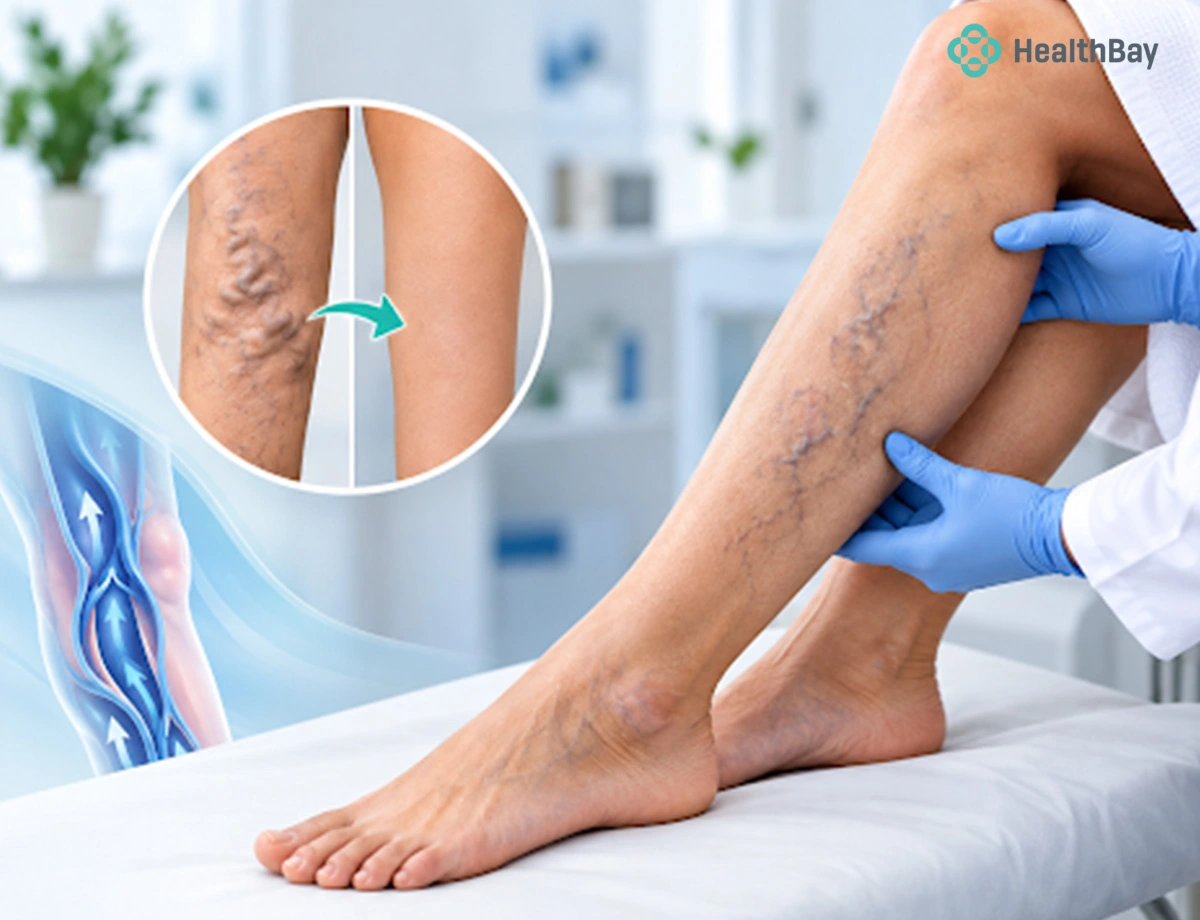
Varicose veins are enlarged, twisted veins that most often appear on the legs and feet, just under the surface of the skin. They develop when the small one-way valves inside your veins weaken or become damaged, allowing blood to pool instead of flowing efficiently back toward the heart. Over time, that pooled blood causes the vein walls to stretch, bulge, and become visible.
But in almost 30% of the cases the problem involves the veins that are located below the skin
and are not visible in this cases there are only symptoms and complications but nothing visible
to indicate that the patient is suffering from varicose veins or medically called venous
insufficiency.
Causes and Risk Factors
Varicose veins tend to develop from a combination of genetics and lifestyle pressure on your leg veins. Common risk factors include:
- Family history – if a parent had varicose veins, your risk is significantly higher
- Jobs that involve long periods of standing or sitting – common among hospitality, retail, aviation crew, and office-based professionals in Dubai
- Pregnancy – growing fetus, increased blood volume and hormonal changes put extra pressure on leg veins (see our guide to antenatal care in Dubai if you’re currently expecting)
- Being overweight – excess body weight adds pressure on the venous system (read more on how obesity increases pressure on your veins and overall health)
- Age – vein walls and valves naturally weaken over time
- Dubai’s climate – heat causes veins to dilate, which can make existing symptoms feel worse in summer months
- The chance of getting varicose veins are the same between men and women the only different are the provoking factors.
Symptoms: When Is It More Than Cosmetic?
Not every varicose vein causes symptoms, but many people experience:
- Visible bulging, twisted, blue or purple veins
- A heavy, aching, or tired feeling in the legs, especially by the end of the day
- Swelling around the ankles and lower legs or skin indentation after removing of the socks or shoes
- Itching or a burning sensation around a vein or in the feet or lower leg
- Muscle cramping, particularly at night
- Skin discoloration or hardened skin near the ankle in more advanced cases
If you’re also noticing changes in leg circulation more broadly, for example if you live with diabetes, it’s worth reading how diabetes affects circulation in the feet, since poor circulation can compound vein-related symptoms.
Left untreated, more advanced varicose veins can lead to skin ulcers, bleeding, or a hardening of tissue called lipodermatosclerosis or blood clots. This is why vascular specialists recommend an evaluation once symptoms move beyond appearance.
How Are Varicose Veins Diagnosed?
A proper diagnosis is important because treating the visible vein alone may not address the underlying circulation problem.
During an assessment, a vascular specialist may:
- Review your symptoms and medical history.
- Examine your legs while you are standing and/or lying down.
- Check for swelling, skin changes, and visible veins.
- Recommend a duplex ultrasound scan to assess blood flow by the treating doctor himself to see the actual condition of every vein the leg.
Duplex ultrasound is a non-invasive examination that helps identify abnormal blood flow and determine which veins or valves are affected. The findings can then be used to select the most appropriate treatment.
At HealthBay, you can consult the Vascular Surgery specialists for assessment and personalised treatment planning.
Varicose Vein Treatment Options
Treatment has moved a long way from traditional vein-stripping surgery. Most cases today are managed with minimally invasive, walk-in walk-out procedures:
| Treatment | How It Works | Commonly Used For | Typical Recovery |
|---|---|---|---|
| Compression therapy | Applies graduated pressure to support venous circulation | Symptom management and selected mild cases | No procedure-related downtime |
| Sclerotherapy | An injectable solution closes the targeted vein | Smaller varicose and spider veins | Usually minimal |
| Foam sclerotherapy | Foam medication is injected into the affected vein by the help of Ultrasound or Augmented realty device | Some larger or more complex veins | Usually short |
| Endovenous Laser Treatment (EVLT) | Laser energy heats and seals the problematic vein | Suitable refluxing veins, including larger veins | Almost no recovery |
| Radiofrequency Ablation (RFA) | Radiofrequency energy closes the affected vein | Many cases of venous reflux but its less power full and less permanent effect comparing to laser | Almost no recovery |
| Microphlebectomy | Enlarged surface veins are removed through tiny skin openings | Prominent, twisted veins | Mobilization 20 minutes after the operation, but some mild discomfort for 1-2 weeks |
**Glue/introducing glue into the veins causing it to close/many cases of venous reflux/ can cause irritation allergy and is with higher side effects/ usually short
Recovery: What to Expect After Treatment
Recovery varies according to the procedure performed and the extent of treatment.
All cases performed by our vascular surgeon are under local anesthesia there is no need for
general or spinal anesthesia that have higher risk and complications
For many minimally invasive procedures, patients can walk soon after treatment and return home the same day. Daily activities can often be resumed the next day.
You may experience:
- Mild tenderness
- Bruising
- Temporary swelling
- Tightness along the treated vein
- Minor discomfort around treatment sites
These effects generally improve as healing progresses.
After EVLT or RFA
Your doctor may recommend compression stockings for a period following treatment. Walking is often encouraged, while strenuous exercise, heavy lifting, flight, or other activities may need to be restricted temporarily for 10 days.
After Sclerotherapy
The treated vein does not disappear immediately. It gradually becomes less visible as the body processes the closed vessel. Depending on the size of the vein and the number treated, visible improvement may take several weeks or longer.
After Microphlebectomy
Because small skin openings are involved, recovery may take somewhat longer than with purely catheter-based procedures. Many people can return to normal routine relatively quickly, but the exact timeline depends on the extent of treatment and individual healing.
Always follow the aftercare instructions provided by your vascular specialist.
What Does Varicose Vein Treatment Cost in Dubai?
Cost depends on several factors: which procedure is recommended, how many veins need treatment, the number of sessions required, and whether the case is considered medical (symptomatic) or purely cosmetic, which also affects insurance coverage.
As a general guide, minimally invasive treatments in Dubai’s private healthcare market commonly range from a few thousand dirhams for a single sclerotherapy session up to the higher end of that range for laser or radiofrequency ablation of larger veins, with more complex or multi-session cases costing more.
Because pricing is procedure- and case-specific, the most accurate figure comes from an in-person consultation and ultrasound assessment. This also allows our team to confirm what your insurance provider will cover, since symptomatic varicose vein treatment is often classified as medically necessary rather than cosmetic.
Preventing Varicose Veins From Getting Worse
- Move regularly – avoid standing or sitting in one position for more than 30–45 minutes at a time
- Elevate your legs above heart level when resting, when possible
- Stay active – walking and swimming both support healthy circulation
- Maintain a healthy weight to reduce pressure on leg veins
- Wear compression stockings during long flights or long shifts on your feet
- Avoid tight clothing around the waist, groin, or legs that can restrict blood flow
Does Insurance Cover Varicose Vein Treatment?
Insurance coverage depends on your individual policy and the medical indication for treatment.
When varicose veins cause significant symptoms or complications, treatment may be considered medically necessary in some circumstances. Cosmetic treatment, on the other hand, will not be covered, this well be clarified after doctor visit and ultrasound examination.
When Should You See a Vascular Specialist?
Consider arranging a vascular assessment if you develop:
- varicose veins
- Persistent leg aching or heaviness
- Recurring swelling
- Skin colour or texture changes in the lower leg
- Itching or discomfort in the legs
- Bleeding from a varicose vein
- A sore or ulcer that does not heal
- Symptoms that are interfering with your daily routine
- Feet or heel pain after long standing or using high heels.
Sudden, significant leg swelling or severe pain should be assessed promptly, as these symptoms can have causes other than uncomplicated varicose veins.
FAQs
Yes. Treatment closes or removes the targeted problematic veins, but it cannot prevent new veins from becoming affected in the future. Regular movement, maintaining a healthy weight, and following your specialist’s advice can help support long-term vein health.
Yes since some veins are in direct connection to each other but some visible veins may have different underlying causes and might not change after the medical treatment of the other veins. Your vascular specialist may recommend treating more than one area if multiple veins are contributing to your symptoms or appearance.
Yes. Varicose veins can develop in one leg or both legs. The extent and location can differ between the two sides, depending on which veins and valves are affected.
Age alone does not necessarily rule out treatment. Suitability depends on your overall health, vein condition, medications, and the results of your vascular assessment. Your specialist can determine whether a particular procedure is appropriate. But since the treatment is performed under local anesthesia in most cases its safe for any age patient.
Travel plans should be discussed with your treating specialist because the recommended waiting period usually is 10 days. Long periods of sitting during air travel may require additional precautions.
The timeframe depends on your occupation and the procedure performed. People with desk-based jobs can resume work the next day, while jobs involving prolonged standing, walking, or physical exertion may require 10 days.
No. Spider veins are smaller, web-like blood vessels that usually appear close to the skin’s surface. Varicose veins are larger, swollen veins and may be associated with underlying venous valve problems, but commonly all are referred to as varicose vein. The appropriate treatment can therefore be different.
Pregnancy can increase pressure on the veins and contribute to the development or worsening of varicose veins. Some pregnancy-related veins may improve after delivery, but the damage to the vein will remain. It’s always advisable to check your veins before pregnancy and get them treated if it requires. If you didn’t get checked before getting pregnant it’s not late to get them checked during pregnancy to evaluate the condition and your vascular surgent plant how to keep you safe during the pregnancy and plan the treatment after delivery.
No. Treatment is not automatically required for every visible varicose vein. The decision depends on symptoms, complications, the underlying vein problem, and your individual treatment goals. A specialist assessment can help determine whether monitoring, conservative treatment or intervention is appropriate.
Useful questions include which vein is causing the problem, whether an ultrasound is required, why a particular procedure is being recommended, what alternatives are available, how many sessions may be needed, expected recovery time, potential risks, and whether your insurance may cover the treatment.
Take the Next Step Towards Healthier-Looking, More Comfortable Legs
If visible veins are accompanied by aching, swelling, heaviness, or other symptoms are accompanied by visible veins or not professional evaluation can help determine what is happening beneath the skin.
HealthBay’s vascular team can assess your veins, explain the available treatment approaches, and recommend an appropriate plan based on your condition.
Book a consultation with the Vascular Surgery team to discuss your concerns and treatment options.
Book an Appoinment


