






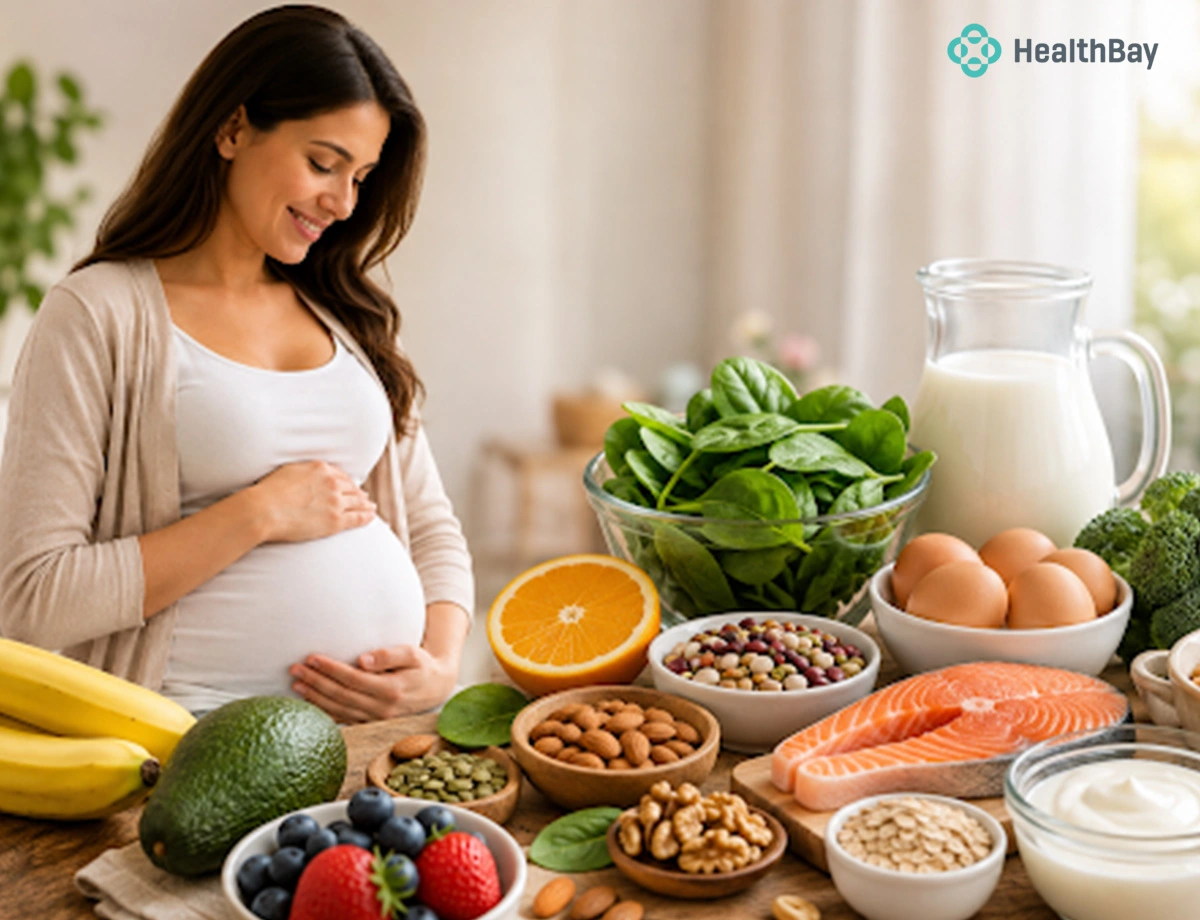
Important Nutrients for a Healthy Pregnancy

Reviewed by
Dr. Christian Jozsa
Consultant Obstetrician and Gynecologist
The most important nutrients during pregnancy include folate, iron, calcium, vitamin D, protein, choline, iodine, omega-3 fatty acids, vitamin C, and potassium. These nutrients support your baby’s brain, bones, nervous system, blood and tissue development while helping maintain your own health throughout pregnancy. A varied diet can provide many of these nutrients, while your obstetrician or nutritionist may recommend prenatal supplements based on your individual needs.
Pregnancy is one of the most exciting , and demanding , times in a woman’s life. Every trimester brings new physical and emotional changes, and behind all of them is a simple fact: your growing baby depends entirely on the nutrients you eat. What you put on your plate directly shapes your baby’s brain development, bone strength, and birth weight, while also protecting your own energy, immunity, and recovery after delivery.
Below is a practical guide to the nutrients that matter most during pregnancy, where to find them, and what’s best left off the menu.
Why Nutrient-Dense Eating Matters in Pregnancy
Pregnancy changes the way your body uses nutrients. Your blood volume increases, your baby is developing rapidly, and your body is preparing for childbirth and breastfeeding. As a result, nutritional requirements for certain vitamins and minerals increase.
However, this does not mean you need to eat twice as much. “Eating for two” is more about nutritional quality than doubling portions.
A balanced diet can help provide the nutrients needed for:
- Fetal brain and nervous system development
- Healthy bone and teeth formation
- Formation of red blood cells
- Development of muscles and tissues
- Maternal bone and muscle health
- Normal immune function
- Healthy pregnancy weight gain
- Energy production and daily functioning
A nutrient-rich diet may also help you manage some common pregnancy concerns, including constipation and fatigue, although these symptoms can have several causes.
The Key Nutrients Every Expecting Mother Needs
1. Folate (Folic Acid)
Folate is a B vitamin that plays a critical role in the early development of your baby’s brain and spinal cord. Getting enough folate — ideally starting before conception and continuing through the first trimester — helps lower the risk of neural tube defects and may also reduce the chance of preterm birth. Good sources: leafy greens like spinach, fortified cereals, beans, lentils, oranges, and peanuts.
2. Iron
Your blood volume expands significantly during pregnancy, and iron is essential for producing the extra hemoglobin needed to carry oxygen to your baby. Low iron levels are linked to fatigue and increase the risk of anemia. Good sources: lean red meat, poultry, fortified cereal, spinach, and beans. Pairing iron-rich foods with vitamin C (like citrus fruit) improves absorption.
3. Calcium
Calcium supports your baby’s developing bones, teeth, heart, and nerves. If your intake falls short, your body will draw calcium from your own bones to meet your baby’s needs — so consistent intake matters. Good sources: milk, yogurt, cheese, fortified juices, and leafy greens.
4. Vitamin D
Vitamin D works alongside calcium to build strong bones and also supports your baby’s immune development. Many pregnant women fall short on vitamin D, especially with limited sun exposure. Good sources: fatty fish, egg yolks, fortified milk, and fortified juices.
5. Protein
Protein is the building block for your baby’s growing tissues and organs, and your own needs increase as pregnancy progresses. Good sources: fish, poultry, eggs, cottage cheese, lentils, and milk.
6. Choline
Choline supports your baby’s brain development and helps prevent neural tube defects, working alongside folate. Good sources: eggs (especially the yolk), lean meat, and fish.
7. Omega-3 Fatty Acids (DHA)
DHA is a type of omega-3 fat that’s especially important for your baby’s brain and eye development, particularly in the third trimester. Good sources: low-mercury fish such as salmon, and walnuts.
8. Iodine
Iodine supports healthy thyroid function for both mother and baby, which in turn affects brain development. Good sources: dairy products, eggs, and iodized salt.
9. Vitamin C
Vitamin C supports your immune system and helps your body absorb iron more efficiently. Good sources: oranges, strawberries, bell peppers, and tomatoes.
10. Potassium
Potassium helps regulate fluid balance and supports healthy blood pressure during pregnancy. Good sources: bananas, spinach, carrots, mangoes, and tomatoes.
Quick-Reference: Nutrients and Food Sources
| Nutrient | Best Food Sources |
|---|---|
| Folic Acid | Spinach, fortified cereal, beans, oranges, peanuts |
| Iron | Red meat, poultry, spinach, fortified cereal, beans |
| Calcium | Milk, yogurt, cheese, fortified juice, spinach |
| Vitamin D | Fatty fish, eggs, fortified milk |
| Protein | Fish, meat, eggs, lentils, cottage cheese |
| Choline | Eggs, lean meat, fish |
| Omega-3 (DHA) | Salmon, walnuts |
| Iodine | Dairy, eggs, iodized salt |
| Vitamin C | Oranges, strawberries, bell peppers |
| Potassium | Bananas, spinach, carrots, tomatoes |
Foods and Habits to Avoid or Limit During Pregnancy
Good pregnancy nutrition is also about making safe food choices.
Depending on medical and local food-safety guidance, pregnant women are generally advised to avoid or limit:
- Raw or undercooked meat
- Raw or undercooked eggs
- Raw or undercooked seafood
- Unpasteurised milk and dairy products
- Certain high-mercury fish
- Raw sprouts
- Alcohol
- Excessive caffeine
- High-dose vitamin A supplements unless medically prescribed
Wash fruits and vegetables thoroughly and follow safe food preparation, cooking, refrigeration, and storage practices.
Building a Sustainable Pregnancy Diet
You don’t need to memorize every gram or microgram — the goal is balance, variety, and consistency over perfection. Focus on:
- A colorful plate of fruits and vegetables at most meals
- Whole grains over refined carbohydrates
- A reliable source of lean protein at each meal
- Staying well hydrated
- A prenatal vitamin to help fill any nutritional gaps, taken under your doctor’s guidance
Some women also need to adjust their diet further for conditions like gestational diabetes, twin pregnancies, or nausea-related food aversions — which is where a personalized nutrition plan makes the biggest difference.
Hydration Is an Important Part of Pregnancy Nutrition
Water is essential for many processes in the body, including digestion and circulation. Staying hydrated is particularly important as your body undergoes changes during pregnancy.
Choose water as your main source of fluids. Milk, soups, fruits, and vegetables can also contribute to overall fluid intake.
Your individual fluid requirements can vary based on factors such as climate, physical activity, diet, and health status.
If you experience persistent vomiting or have difficulty keeping fluids down, speak with your healthcare provider.
Do You Need Pregnancy Supplements?
Even a well-balanced diet may not provide every nutrient in the required amount. Your obstetrician may recommend a prenatal supplement based on your nutritional intake, blood test results, medical history, and individual pregnancy needs.
Commonly recommended supplements may contain nutrients such as:
- Folic acid
- Iron
- Vitamin D
- Iodine
- Other vitamins and minerals
Do not take multiple supplements without professional advice. Combining products can sometimes result in excessive intake of certain nutrients.
Common Pregnancy Nutrition Mistakes to Avoid
Even with good intentions, some common habits can make it harder to meet nutritional requirements.
Skipping meals regularly
Long gaps between meals may make it harder to maintain energy and adequate nutritional intake.
Relying heavily on processed foods
Occasional convenience foods can fit into a balanced diet, but meals should primarily include nutrient-rich whole foods.
Taking supplements without advice
More is not always better. Certain vitamins and minerals can cause harm when taken in excessive amounts.
Avoiding entire food groups unnecessarily
Eliminating dairy, grains, meat, or other food groups without suitable alternatives can create nutritional gaps.
Not discussing persistent symptoms
Ongoing vomiting, severe food aversions, or difficulty maintaining adequate food and fluid intake should be discussed with your healthcare provider.
Making Healthy Nutrition Choices During Pregnancy
A healthy pregnancy starts with good nutrition. Getting enough essential nutrients such as folate, iron, calcium, vitamin D, protein, choline, iodine, omega-3 fatty acids, vitamin C, and potassium can support your health and your baby’s growth and development. Choosing a varied, nutrient-rich diet, staying hydrated, and following your healthcare professional’s advice can help you meet your changing nutritional needs throughout pregnancy.
Since every pregnancy is different, your nutritional requirements may vary depending on your trimester, lifestyle, dietary preferences, and health needs. If you are unsure about what to eat or whether you need supplements, personalized guidance from a qualified nutrition professional can help.
FAQs
Folate, iron, calcium, vitamin D, protein, choline, iodine, omega-3 fatty acids, vitamin C, and potassium are among the important nutrients needed during pregnancy. Individual requirements can vary.
Folic acid supports the early development of the baby’s brain and spinal cord and helps reduce the risk of neural tube defects. It is often recommended before conception and during early pregnancy.
Lean meat, poultry, beans, lentils, spinach, tofu, nuts, seeds, and fortified cereals can provide iron. Combining plant-based iron sources with vitamin C-rich foods can improve absorption.
Milk, yogurt, cheese, calcium-fortified beverages, tofu, and certain leafy green vegetables are useful sources of calcium.
Yes. Protein provides amino acids needed for fetal growth and development and supports changes in the mother’s body.
Pregnancy-safe oily fish such as salmon and sardines are good sources. Walnuts, chia seeds, and flaxseeds also provide omega-3 fats.
Some women require prenatal supplements to meet specific nutritional needs. The appropriate supplements and doses should be determined with guidance from an obstetrician or qualified healthcare professional.
Yes. A vegetarian pregnancy diet can provide adequate nutrition when it is carefully planned to include sufficient protein, iron, vitamin B12, calcium, iodine, and other essential nutrients.
Raw or undercooked animal foods, unpasteurised dairy products, alcohol, and certain high-mercury fish should generally be avoided. Safe food handling is also important.
You can consult a dietitian if you have dietary restrictions, nutritional deficiencies, gestational diabetes, food allergies, difficulty eating, concerns about weight gain, or simply want personalised pregnancy nutrition guidance.
Get Personalized Pregnancy Nutrition Support
Every pregnancy is different, and so are its nutritional needs. HealthBay’s Nutrition department offers specialized nutrition plans for pregnancy, gestational diabetes, and breastfeeding, with our qualified clinical dietitians helping you build an eating plan tailored to your trimester, lifestyle, and any medical considerations.
Book a consultation with our nutritionist in Dubai today and take a confident step toward a healthier pregnancy.
Book an Appoinment


